

Understanding tendon symptoms and why recovery requires progressive, carefully managed loading.
Tendons respond to changes in load
Tendinopathy can affect the Achilles tendon, patellar tendon, rotator cuff or tendons around the elbow, among others. Symptoms often appear after a rapid increase in training, repetitive work or a reduction in the tissue's ability to tolerate load.
Pain does not necessarily mean that the tendon needs complete rest. Stopping all activity can further reduce capacity and make returning to activity more difficult.
Finding a manageable dose
Rehabilitation starts by temporarily adjusting loads that aggravate symptoms and introducing tolerable exercises. Isometric exercises, slow strengthening work, exercises involving elastic loading and activity-specific movements may be used at different stages.
The response in the following hours guides progression. A mild, temporary increase in symptoms may be acceptable, while a marked or lasting reaction indicates that the dose needs to be reviewed.
Technology and returning to activity
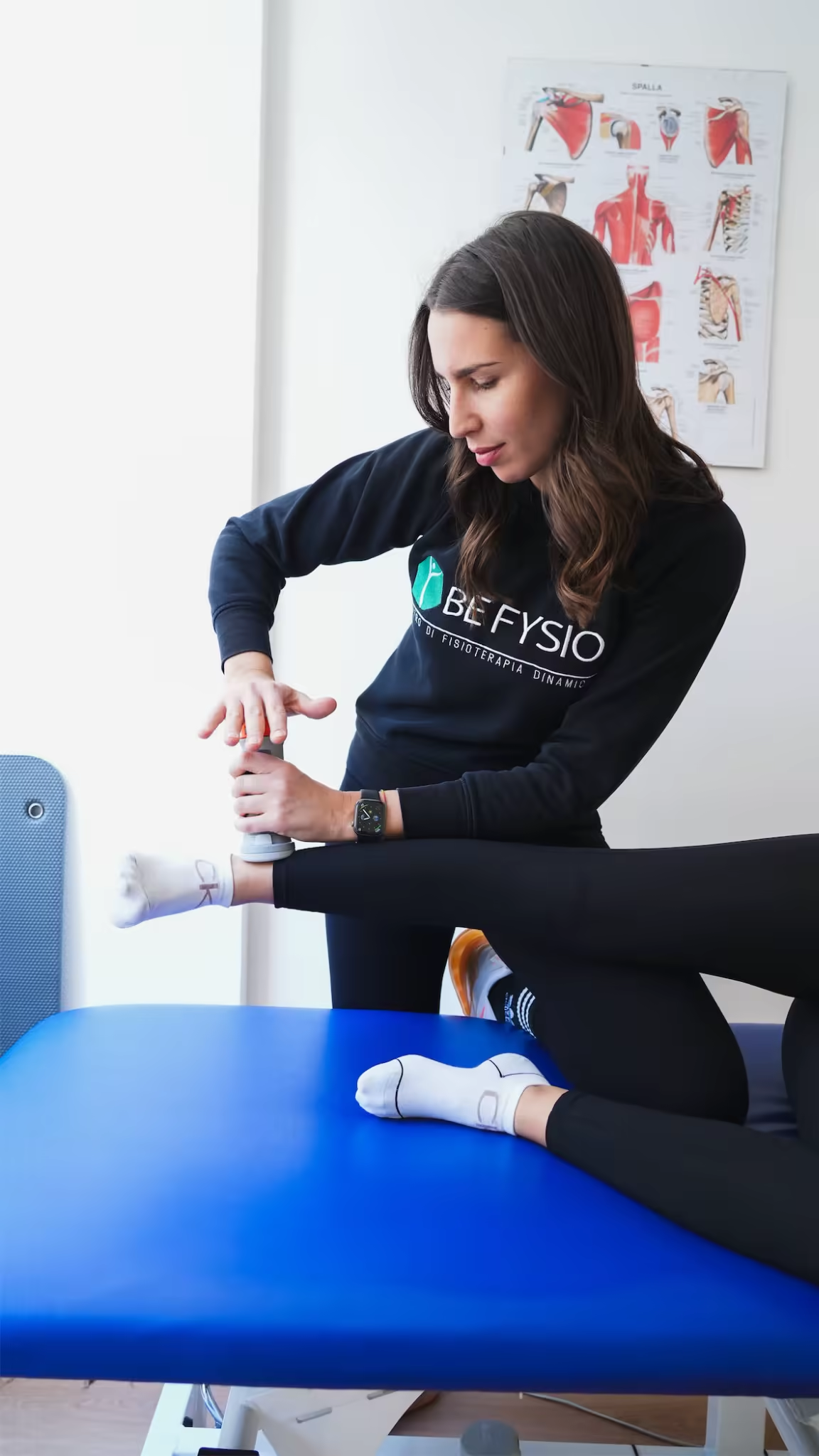
Shockwave therapy or other technologies may be considered for selected conditions, but they do not replace load management and exercise. There should be a clear clinical indication for their use.
Returning to running, jumping or sport involves gradually increasing intensity, speed and volume to meet the actual demands of the activity.
This content is for information only and does not replace an individual medical or physiotherapy assessment.